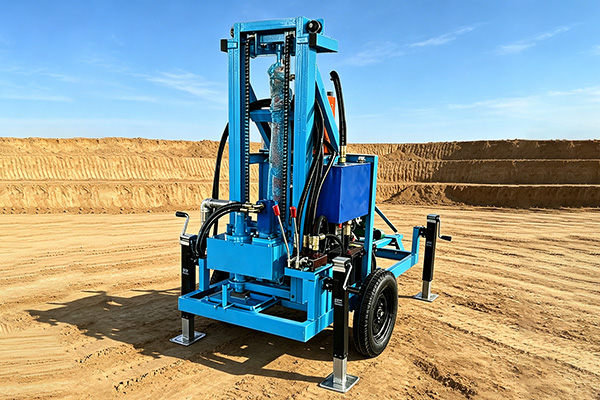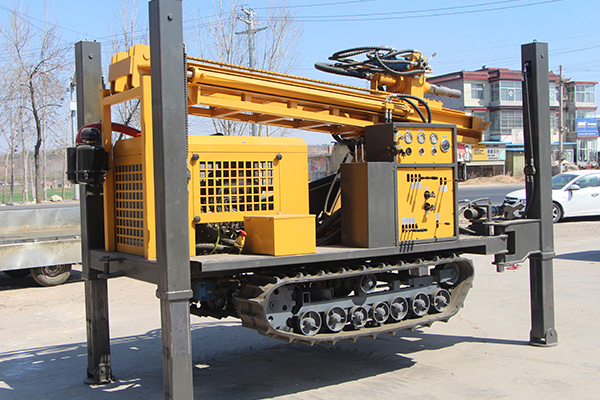
Regular and standardized maintenance is the core measure to ensure stable operation of pneumatic water well drilling rigs, extend equipment service life, reduce failure rate and guarantee on-site operation safety. This guide applies to the full series of pneumatic water well drilling rigs, and each model can adjust corresponding maintenance items based on its actual configuration.

Part 1: Daily Maintenance (Before & After Operation)
1.Pre-operation Inspection
● Overall appearance inspection: Check structural parts, welds, support legs and travel mechanism for obvious deformation, cracks or loose bolts; confirm guardrails, foot pedals and other protective components are intact.
● Fluid level inspection: Check levels of engine oil, hydraulic oil, fuel and coolant; replenish corresponding grade fluids according to standards if insufficient.
● Pneumatic system inspection: Check high-pressure air pipelines for firm connection and air leakage; open drain valves at the bottom of the air-water separator and air tank to fully discharge condensed water.
● Drilling mechanism inspection: Confirm connecting threads of drill pipes and DTH hammers are free from damage; power head and rotary mechanism run without abnormal noise; check operating handles and control valves for flexible and accurate movement.
● Safety device inspection: Confirm pressure gauges, tachometers, oil temperature gauges and other instruments display normally; verify emergency stop buttons, alarm devices and lighting systems are fully functional.
2. Post-operation Cleaning & Inspection
● Clean dust, rock cuttings and debris on the fuselage surface, cooling fins and air filter inlet to keep cooling and air intake channels unobstructed.
●Patrol all pipelines and joints for leakage and abnormal wear, and identify and eliminate hidden dangers in time.
●Retract support legs and drilling mast to the transport position after work, lock moving parts and secure the equipment.
●Record daily running hours, fault symptoms and handling status, and keep complete maintenance records.

Part 2: Weekly Maintenance
1. Filter inspection and cleaning: Take out the engine air filter for high-pressure purging and cleaning; check the fuel coarse filter and diesel filter for clogging, and replace as needed.
2. Lubrication of key parts: Grease friction parts such as support leg pins, luffing cylinder pins, slewing bearing, chains and pulleys with corresponding grade grease.
3. Travel system inspection: Check track tension and adjust as needed; inspect wear of track shoes, drive wheels and guide wheels, and retighten connecting bolts.
4. Winch and hoisting mechanism inspection: Check wire ropes for broken wires, corrosion and excessive wear, and ensure neat arrangement; verify braking reliability of brakes and clutches.

Part 3: Monthly Maintenance
1. Engine maintenance: Replace engine oil and oil filter according to accumulated running hours; check drive belt tension and replace simultaneously if severely worn.
2. In-depth pneumatic system maintenance: Check lubricant level and quality of the air compressor; clean dryer and precision filter elements, and replace aged seals.
3. Electrical system inspection: Tighten all wiring terminals; check cable sheaths for damage and aging; test battery voltage and electrolyte level, and clean oxide on terminals.
4. Actuator inspection: Check cylinder piston rods for scratches and corrosion, and dust boots for damage; verify smooth lifting and lowering of support legs and drilling mast.

Part 4:Quarterly & Annual Maintenance
1. Replace hydraulic oil return filter and pilot filter; send hydraulic oil for testing of viscosity, cleanliness and other performance indicators, and replace all oil if deteriorated.
2. Special air compressor maintenance: replace compressor oil and oil-gas separator filter; check working status and tightness of the inlet valve and minimum pressure valve.
3. Comprehensively check internal wear of DTH hammers, replace wearing parts such as pistons and sealing rings to ensure drilling efficiency.

Part 5: Annual Maintenance
1. Whole machine structure inspection: Conduct non-destructive testing on main load-bearing structural parts and key welds; re-tighten all high-strength connecting bolts according to standard torque.
2. Engine overhaul-level maintenance: Replace the full set of filters (air filter, oil filter, fuel filter, water-fuel separator); check valve clearance and injector working condition.
3. Comprehensive hydraulic system cleaning: Thoroughly clean the hydraulic oil tank, replace all hydraulic oil and filters; detect internal wear of oil pumps, hydraulic motors and main control valve groups.
4. Safety system calibration: Calibrate pressure gauges, safety valves and overload protection devices to ensure accurate safety thresholds and reliable protection functions.

Part 6: Long-term Storage Maintenance
1. Thoroughly clean the inside and outside of the whole machine; apply anti-rust oil on exposed metal machined surfaces, and fully retract all cylinder piston rods into the cylinders.
2. Drain all accumulated water and residual air pressure in air tanks, air-water separators and air pipelines, and close all air circuit valves.
3. Fill the engine with storage-specific engine oil and disconnect the battery negative terminal; store the battery separately and recharge it regularly.
4. Start and run the machine under no load for a short time once a month to check the operation status of each system and prevent components from moisture, corrosion and jamming.

Part 7: Safety Maintenance Instructions
1. All maintenance operations must be carried out after the equipment is shut down, pressure released, power cut off, and a warning sign "No Operation During Maintenance" is hung.
2. Maintenance personnel must wear personal protective equipment such as goggles, protective gloves and safety shoes; safety belts must be fastened during high-altitude operations.
3. Oil, filter elements and wearing parts must use original or qualified products of the same specification; mixing different grades of hydraulic oil and lubricating oil is strictly prohibited.
4. Electrical system maintenance must be operated by certified professional electricians; dismantling and repairing electrical components and circuits with power on is strictly prohibited.


Phone Number / WhatsApp
+8619006471765
Address
Rm 2616, 26/F, Unit 1, Building 1, Wanli Fude Plaza, High-tech Zone, Jining City, Shandong Province, China. 272000
Copyright © Shandong Mikton Heavy Industry Technology Co., Ltd. All rights reserved.|Privacy Policy


Submit your questions via the form below for a response within 1 business day.
TOP